Would You Do Medicine All Over Again Qoura
The medications that change who we are
(Image credit:
Getty Images
)
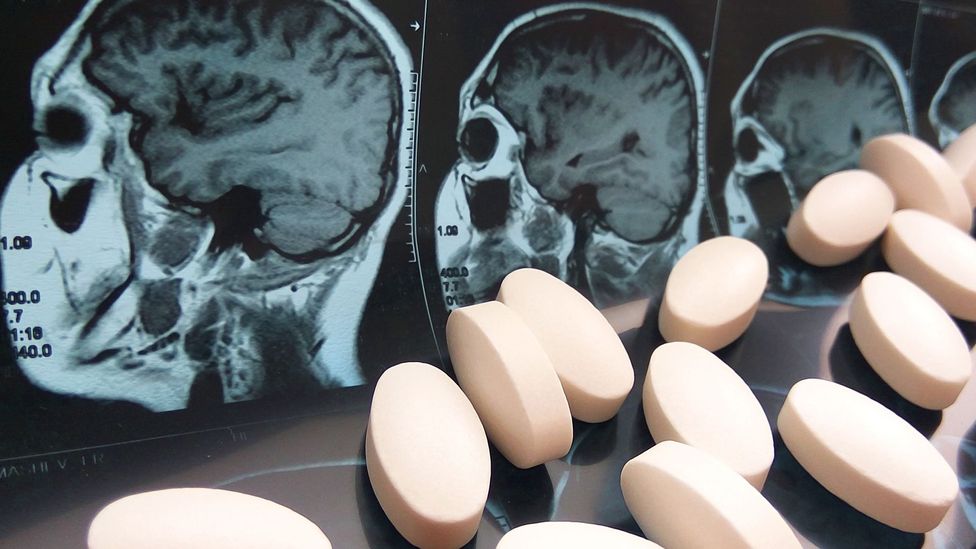
They've been linked to road rage, pathological gambling, and complicated acts of fraud. Some make us less neurotic, and others may even shape our social relationships. Information technology turns out many ordinary medications don't merely affect our bodies – they affect our brains. Why? And should there be warnings on packets?
T
To mark the terminate of a turbulent year, we are bringing back some of our favourite stories for BBC Future'due south "Best of 2020" drove. Find more of our picks here .
"Patient Five" was in his late 50s when a trip to the doctors changed his life.
He had diabetes, and he had signed up for a study to see if taking a "statin" – a kind of cholesterol-lowering drug – might assistance. So far, and so normal.
But presently after he began the treatment, his married woman began to detect a sinister transformation. A previously reasonable human, he became explosively angry and – out of nowhere – adult a tendency for road rage. During one memorable episode, he warned his family to keep away, lest he put them in infirmary.
Out of fearfulness of what might happen, Patient Five stopped driving. Even as a rider, his outbursts often forced his wife to abandon their journeys and plow back. Afterward, she'd go out him lone to lookout man TV and at-home downward. She became increasingly fearful for her own condom.
So one twenty-four hour period, Patient Five had an epiphany. "He was like, 'Wow, it really seems that these problems started when I enrolled in this study'," says Beatrice Golomb, who leads a research group at the University of California, San Diego.
You might also similar:
- Why some people become sudden geniuses
- The mood-altering power of the Moon
- Are digital drugs the time to come of medication?
Alarmed, the couple turned to the written report's organisers. "They were very hostile. They said that the two couldn't peradventure be related, that he needed to keep taking the medication, and that he should stay in the study," says Golomb.
Ironically, by this bespeak the patient was so cantankerous that he flatly ignored the doctors' communication. "He swore roundly, stormed out of the office and stopped taking the drug immediately," she says. Two weeks afterward, he had his personality back.
Others take not been so lucky. Over the years, Golomb has collected reports from patients beyond the U.s. – tales of cleaved marriages, destroyed careers, and a surprising number of men who accept come unnervingly close to murdering their wives. In almost every case, the symptoms began when they started taking statins, and so promptly returned to normal when they stopped; one man repeated this bike five times before he realised what was going on.
Antidepressants may not just lighten moods, they may also reduce expressions of neuroticism, research suggests (Credit: Getty Images)
Co-ordinate to Golomb, this is typical – in her feel, most patients struggle to recognise their own behavioural changes, let lone connect them to their medication. In some instances, the realisation comes too late: the researcher was contacted by the families of a number of people, including an internationally renowned scientist and a sometime editor of a legal publication, who took their own lives.
Nosotros're all familiar with the mind-bending properties of psychedelic drugs – simply it turns out ordinary medications can be just every bit potent. From paracetamol (known as acetaminophen in the Us) to antihistamines, statins, asthma medications and antidepressants, there's emerging show that they tin brand us impulsive, aroused, or restless, diminish our empathy for strangers, and fifty-fifty manipulate fundamental aspects of our personalities, such equally how neurotic we are.
In most people, these changes are extremely subtle. But in some they can besides be dramatic.
Dorsum in 2011, a French father-of-two sued the pharmaceutical company GlaxoSmithKline, claiming that the drug he was taking for Parkinson'southward affliction had turned him into a gambler and gay sexual practice addict, and was responsible for risky behaviours that had led to him being raped.
Then in 2015, a human who targeted young girls on the cyberspace used the argument that the anti-obesity drug Duromine made him do information technology – he said that information technology reduced his ability to command his impulses. Every now and again, murderers effort to blame sedatives or antidepressants for their offences.
If these claims are true, the implications are profound. The listing of potential culprits includes some of the most widely consumed drugs on the planet, meaning that fifty-fifty if the furnishings are small at an private level, they could exist shaping the personalities of millions of people.
Research into these effects couldn't come at a improve fourth dimension. The world is in the midst of a crisis of over-medication, with the Usa alone buying up 49,000 tonnes of paracetamol every year – equivalent to about 298 paracetamol tablets per person – and the average American consuming $1,200 worth of prescription medications over the same flow. And as the global population ages, our drug-lust is ready to screw even further out of control; in the UK, ane in 10 people over the age of 65 already takes eight medications every week.
In the U.s., more than 49,000 tons of paracetamol is consumed every year - the equivalent of 298 pills per person (Credit: Getty Images)
How are all these drugs affecting our brains? And should there be warnings on packets?
Of course, no one is suggesting that people should stop taking their medications, which may be lifesaving – if you have whatsoever concerns, the best course of action is to speak to a doctor. Nevertheless, in that location's a growing awareness of the importance of research in this surface area, which may lead to better pharmaceutical drugs or a more nuanced analysis of their risks and benefits.
Golomb showtime suspected a connection between statins and personality changes virtually two decades ago, later a series of mysterious discoveries, such equally that people with lower cholesterol levels are more probable to die violent deaths. So one mean solar day, she was chatting to a cholesterol expert about the potential link in the hallway at her piece of work, when he brushed information technology off equally obviously nonsense. "And I said 'how do nosotros know that?'," she says.
Filled with fresh decision, Golomb scoured the scientific and medical literature for clues. "There was shockingly more evidence than I had imagined," she says. For ane thing, she uncovered findings that if yous put primates on a low-cholesterol nutrition, they become more aggressive.
There was even a potential mechanism: lowering the animals' cholesterol seemed to affect their levels of serotonin, an important brain chemical thought to be involved in regulating mood and social behaviour in animals. Fifty-fifty fruit flies start fighting if you mess up their serotonin levels, only information technology also has some unpleasant effects in people – studies have linked it to violence, impulsivity, suicide and murder.
If statins were affecting people'south brains, this was likely to be a direct consequence of their power to lower cholesterol.
Since and so, more directly prove has emerged. Several studies accept supported a potential link between irritability and statins, including a randomised controlled trial – the gold-standard of scientific inquiry – that Golomb led, involving more 1,000 people. Information technology found that the drug increased aggression in mail-menopausal women though, oddly, not in men.
In 2018, a written report uncovered the aforementioned upshot in fish. Giving statins to Nile tilapia fabricated them more confrontational and – crucially – altered the levels of serotonin in their brains. This suggests that the mechanism that links cholesterol and violence may have been around for millions of years.
Golomb remains convinced that lower cholesterol, and, by extension, statins, can cause behavioural changes in both men and women, though the forcefulness of the outcome varies drastically from person to person. "There are lines of testify converging," she says, citing a study she conducted in Sweden, which involved comparing a database of the cholesterol levels of 250,000 people with local criminal offence records. "Even adjusting for confounding factors, it was still the case that people with lower cholesterol at baseline were significantly more than likely to be arrested for violent crimes.".

Fruit flies become more aggressive when their serotonin levels become mixed upward, research has shown (Credit: Getty Images)
Only Golomb's virtually unsettling discovery isn't and then much the bear upon that ordinary drugs can have on who we are – it's the lack of involvement in uncovering it. "There'south much more of an accent on things that doctors tin easily measure," she says, explaining that, for a long time, research into the side-effects of statins was all focused on the muscles and liver, because whatever issues in these organs tin be detected using standard blood tests.
This is something that Dominik Mischkowski, a pain researcher from Ohio University, has also noticed. "At that place is a remarkable gap in the research actually, when it comes to the effects of medication on personality and behaviour," he says. "We know a lot about the physiological effects of these drugs – whether they take concrete side furnishings or not, you lot know. Just we don't understand how they influence human behaviour."
Mischkowski'due south own research has uncovered a sinister side-outcome of paracetamol. For a long time, scientists have known that the drug blunts physical pain by reducing action in certain brain areas, such as the insular cortex, which plays an important office in our emotions. These areas are involved in our experience of social hurting, too – and intriguingly, paracetamol tin can make the states feel better after a rejection.
And recent research has revealed that this patch of cerebral real-estate is more crowded than anyone previously idea, because it turns out the brain's hurting centres also share their abode with empathy.
For case, fMRI (functional magnetic resonance imaging) scans have shown that the same areas of our brain become active when we're experiencing "positive empathy" –pleasance on other people's behalf – every bit when we're experiencing pain.
Given these facts, Mischkowski wondered whether painkillers might be making it harder to experience empathy. Earlier this yr, together with colleagues from Ohio University and Ohio Country Academy, he recruited some students and spilt them into two groups. One received a standard 1,000mg dose of paracetamol, while the other was given a placebo. Then he asked them to read scenarios nigh uplifting experiences that had happened to other people, such as the good fortune of "Alex", who finally plucked upward the backbone to ask a girl on a date (she said yes).

L-dopa is the most successful treatment for Parkinson's, merely it can accept side effects, making people deed more impulsively (Credit: Getty Images)
The results revealed that paracetamol significantly reduces our ability to feel positive empathy – a outcome with implications for how the drug is shaping the social relationships of millions of people every day. Though the experiment didn't wait at negative empathy – where nosotros experience and relate to other people's hurting – Mischkowski suspects that this would too be more difficult to summon after taking the drug.
"I'thousand not entirely inferior anymore every bit a researcher, and to be honest, this line of research is really the most worrisome that I've ever conducted," he says. "Especially because I'k well aware of the numbers [of people] involved. When you requite somebody a drug, you don't just give it to a person – you give it to a social system. And we really don't understand the effects of these medications in the broader context."
Empathy doesn't but determine if you're a "nice" person, or if you cry while you're watching sad movies. The emotion comes with many practical benefits, including more stable romantic relationships, better-adjusted children, and more successful careers – some scientists have even suggested that information technology's responsible for the triumph of our species. In fact, a quick glance at its many benefits reveals that casually lowering a person's ability to empathise is no little matter.
Technically, paracetamol isn't changing our personalities, because the effects only final a few hours and few of us take information technology continuously. But Mischkowski stresses that we practise need to exist informed about the ways it affects u.s.a., so that we can use our common sense. "But like we should be aware that you shouldn't become in front of the bicycle if you lot're nether the influence of booze, you don't want to accept paracetamol and then put yourself into a situation that requires y'all to be emotionally responsive – like having a serious conversation with a partner or co-worker."
One reason medications can have such psychological ascendancy is that the body isn't just a bag of dissever organs, awash with chemicals with well-defined roles – instead, information technology'due south a network, in which many different processes are linked.
For example, scientists accept known for a while that the medications used to treat asthma are sometimes associated with behavioural changes, such every bit an increase in hyperactivity and the development of ADHD symptoms. And then, more recently, research uncovered a mysterious connection between the ii disorders themselves; having one increases the risk of having the other by 45-53%. No one knows why, but one thought is that asthma medications bring on ADHD symptoms by altering levels or serotonin or inflammatory chemicals, which are thought to exist involved in the development of both conditions.
There accept been many reports of severe psychological alter from the use of statins (Credit: Getty Images)
Sometimes these links are more than obvious. Dorsum in 2009, a squad of psychologists from Northwestern Academy, Illinois, decided to bank check if antidepressants might be affecting our personalities. In particular, the team were interested in neuroticism. This "Big Five" personality trait is epitomised past broken-hearted feelings, such as fear, jealousy, green-eyed and guilt.
For the report, the team recruited adults who had moderate to astringent depression. They gave i third of the study's participants the antidepressant paroxetine (a kind of selective serotonin reuptake inhibitor (SSRI)), one 3rd a placebo, and one 3rd talking therapy. They so checked to see how their mood and personalities changed from the beginning to the end of a 16-calendar week treatment.
"We found that massive changes in neuroticism were brought almost by the medicine and non very much at all by the placebo [or the therapy]," says Robert DeRubeis, who was involved in the report. "It was quite hit."
The large surprise was that, though the antidepressants did brand the participants feel less depressed, the reduction in neuroticism was much more than powerful – and their influence on neuroticism was independent of their impact on depression. The patients on antidepressants besides started to score more highly for extroversion.
It's important to note that information technology was a relatively small study, and no 1 has tried to repeat the results yet, and so they may not be totally reliable. But the idea that antidepressants are affecting neuroticism direct is intriguing. One idea is that the trait is linked to level of serotonin in the encephalon, which is altered by the SSRIs.
While becoming less neurotic might sound similar an appealing side-consequence, it'south not necessarily all good news. That'due south considering this aspect of our personalities is something of a double-edged sword; yes, it's been associated with all kinds of unpleasant outcomes, such as an before death, but it'south also thought that broken-hearted over-thinking might be helpful. For case, neurotic individuals tend to be more run a risk-averse, and in certain situations worrying tin can improve a person'southward performance.

Cholesterol-lowering drugs salvage tens of thousands of lives every year, then people should seek medical advice before stopping taking them (Credit: Getty Images)
"What [the American psychiatrist] Peter Kramer warned usa nigh was that when some people are on antidepressants, what can happen is that they begin not to intendance well-nigh things that people intendance nigh," says DeRubeis. If the results practise hold up, should patients be warned about how their handling might change them?
"If I were advising a friend, I would certainly want them to exist on the watch for those kinds of undesirable effects, simply like they would naturally be looking out for other side-effects, like whether they're gaining weight, and so on," says DeRubeis.
At this point it's worth pointing out that no i is arguing that people should stop taking their medication. Despite their subtle furnishings on the brain, antidepressants have been shown to help prevent suicides, cholesterol-lowering drugs salve tens of thousands of lives every yr, and paracetamol is on the Globe Health Organisation's list of essential drugs because of its ability to salve pain. Just information technology is important that people are informed about whatsoever potential psychological side-furnishings.
The thing takes on a whole new urgency, when y'all consider that some personality changes tin can be dramatic. There's solid bear witness that the drug Fifty-dopa, which is used to treat Parkinson's disease, increases the risk of Impulse Control Disorders (ICDs) – a grouping of problems that go far more than difficult to resist temptations and urges.
Consequently, the drug can have life-ruining consequences, as some patients suddenly offset taking more risks, becoming pathological gamblers, excessive shoppers, and sexual practice pests. In 2009, a drug with like backdrop hit the headlines, after a man with Parkinson's committed a £45,000 ($60,000) ticket scam. He blamed it on his medication, claiming that information technology had completely changed his personality.
The association with impulsive behaviours makes sense, because 50-dopa is essentially providing the encephalon with a dose of extra dopamine – in Parkinson'south affliction the part of the brain that produces it is progressively destroyed – and the hormone is involved in providing us with feelings of pleasance and advantage.
Experts agree that Fifty-dopa is the most effective treatment for many of the symptoms of Parkinson's disease, and information technology's prescribed to thousands of people in the United states every yr. This is despite a long list of possible side effects that accompanies the medication, which explicitly mentions the risk of unusually strong urges, such as for gambling or sexual activity.
In fact, DeRubeis, Golomb and Mischkowski are all of the opinion that the drugs they're studying will continue to exist used, regardless of their potential psychological side-effects. "We are human beings, y'all know," says Mischkowski. "We take a lot of stuff that is non necessarily e'er proficient in every circumstance. I ever apply the example of alcohol, because information technology'south likewise a painkiller, like paracetamol. We take it because we feel that it has a benefit for us, and it's OK equally long equally yous take information technology in the right circumstances and yous don't consume besides much.".
But in society to minimise any undesirable furnishings and get the most out of the staggering quantities of medications that we all take each day, Mischkowski reiterates that we need to know more. Because at the moment, he says, how they are affecting the behaviour of individuals – and even entire societies – is largely a mystery.
--
Disclaimer
All content within this column is provided for general information only, and should not exist treated every bit a substitute for the medical advice of your own doctor or any other health intendance professional. The BBC is non responsible or liable for whatsoever diagnosis fabricated by a user based on the content of this site. The BBC is non liable for the contents of any external internet sites listed, nor does it endorse any commercial product or service mentioned or advised on any of the sites. Ever consult your own GP if you're in any fashion concerned about your health.
--
Join one million Futurity fans past liking u.s. on Facebook , or follow us on Twitter or Instagram .
If you liked this story, sign up for the weekly bbc.com features newsletter , chosen "The Essential List". A handpicked selection of stories from BBC Futurity, Civilisation, Worklife, and Travel, delivered to your inbox every Friday.
davidsonengropose.blogspot.com
Source: https://www.bbc.com/future/article/20200108-the-medications-that-change-who-we-are
0 Response to "Would You Do Medicine All Over Again Qoura"
Post a Comment